

Why is there a whiteboard in the woods?

Image by Pete Scullion.
At Trash Free Trails, this probably isn’t the strangest thing you’ll see. But it does beg the question: why are we standing outside with marker pens anyway?
Because our data doesn’t start in spreadsheets. It starts on the trail.
At TFT, we’re lucky enough to have a community made up of magical types of people: those who love a good graph, and those who love being outside. Often, they are the same people. And while classrooms and powerpoints have their place, our favourite place to talk about numbers is wherever the data was actually found.
That’s how Whiteboard in the Woods was born - our monthly way of telling a data story, outside, with our wonky whiteboard. It’s our attempt to show the power behind all those little tally marks you submit after a clean.

Image by Rach Coleman TFT heads to the Senedd to share the environmental case for a Deposit Return Scheme.
Why numbers matter.
Recently, we took that whiteboard story a step further - all the way to Wales.
Our latest video looks at Deposit Return Scheme (DRS) eligible items spread across Wales, and how the number of submissions we receive directly affects how accurate our picture becomes.
That’s why we were in The Senedd (Welsh Parliament) recently, alongside Marine Conservation Society, Reloop, Keep Wales Tidy and Surfers Against Sewage, sharing the environmental case for Wales’ Deposit Return Scheme. Not only as a lifeline for our trails, but as a shift towards stewardship, community empowerment and economic resilience.
Wales has a strong track record of environmental ambition, and what we brought to the table was something simple but vital: Actual items, from actual trails, logged by actual people.
Evidence from the ground up.
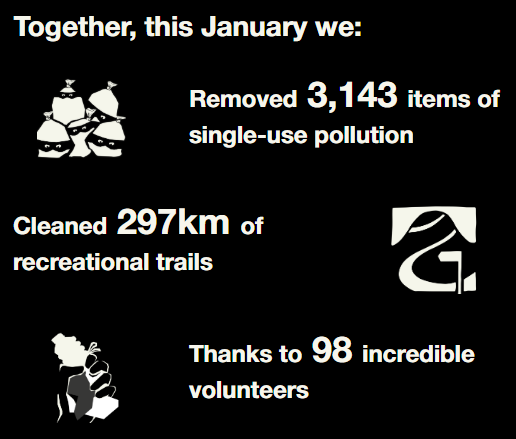
January is usually a month for hibernation. Letting the depths of winter howl past on the other side of the windows, yet even in the coldest, darkest stretch of the year you showed up, and so for the first time we’re proud to share our Monthly Morsels Data, right here on our blog!
Out of everything found in Janurary:
87% was single-use pollution
88% of submissions found DRS-eligible items
96% found EPR-eligible items
30% found dog poo bags
Red Bull and Lucozade fought it out for brand of the month, with Haribo and Coke tied for third.
Over a quarter of surveys reported wildlife interactions with litter, and 6% recorded animal deaths. And yet:
61% felt more connected to nature
96% said they’d do it again
The bit we don’t see (and why it matters)
As one big cherry on top of all of that, when looking at our community survey data we found that comparing what people say they remove with what gets formally submitted, we estimate that in 2025 alone, our community likely removed an additional 150,000 items from trails that never made it into the dataset!
That means the impact is bigger than even the graphs show. And that with each submission made, it sharpens the picture for everyone. So if you ever see us in the woods with a whiteboard, this is what’s behind it!


I really like the idea of using a whiteboard outdoors to show how small actions can create a real difference for local trails. I have noticed that litter becomes easier to understand as a problem when people record what they actually find. While managing a research task, I needed purchase dissertation paper in uk options when I felt unsure how to organise my academic work. This post shows how collecting simple data can help communities understand environmental problems and make better decisions. your post makes me smile
I love the idea of taking data from spreadsheets into the woods and using real trail evidence to drive environmental action. The community’s contribution makes the impact even more meaningful. Room and linen sprays can also be a simple way to keep indoor spaces fresh.
I love the creative idea of taking data into the woods and showing how community efforts can make a real environmental impact. The focus on cleaner trails and protecting wildlife is inspiring, just as orthopedic beds for senior dogs support the comfort and wellbeing of pets.
I really enjoyed reading this article because the idea of placing a whiteboard in the woods is simple but surprisingly useful. It shows how small community efforts can help people notice litter, wildlife activity, and other changes happening along local trails. The focus on recording real observations also makes the project feel practical and educational rather than just another environmental campaign. While exploring similar topics around research and data analysis, I came across SPSS Assignment Writing Service, which also connects with the kind of academic work students handle through new assignment help uk resources. Overall, an interesting approach to encouraging people to pay more attention to their surroundings.
As a student preparing for university applications, I think an SOP should reflect both personality and academic direction. Simply listing achievements does not create a meaningful application. The statement should explain what motivated the chosen field and how past experiences shaped future ambitions.
I found SOP Writing Help useful for understanding how to structure these ideas naturally. It encouraged me to focus on relevant experiences instead of adding unnecessary information. I also learned that each paragraph should contribute something valuable to the overall story. This approach makes the statement easier to read while allowing admissions teams to understand my goals more clearly.