

Friluftsiv: Lessons in free-air living from Scandinavia
words by Sophie Lawson

Early September in Sweden
The edge of the leaves twinge yellow and the smell of fresh pine pine hangs in the air. The forest floor is a mosaic of moss and mushrooms: red and spotty, brown and slimy, white and fluffy, green and spiralling. The taste of lingonberry lingers in my mouth as our forest bathing guide directs our attention away from the sounds of the city below and towards the birds chirping in the trees nearby.
I have come to Sundsvall for the biennial meeting of the European Network of Outdoor Sports (courtesy of the Welsh Government!) to share our work and make new connections. It’s not everyday you find a mountain bike guide, a government official, an academic, a psychologist and a local nature lover gathered around a table enjoying the swedish tradition of “fika” - a mindful break to connect with others over coffee and cinnamon bun - but at #EuroMeet26 this is a regular and recurring scene.
Although we are nominally gathered here in the name of outdoor sports, the conversation centres around something quite different: the nordic concept of Friluftsliv (pronounced free-looft-sleeve). Friluftsliv can be translated as “open-air living”, a way of being in nature that is focused on connection rather than competition. Though it includes activities like running and cycling the focus is more on the outdoors than the sport. There is talk of picnics, hammocks and picking berries and disapproving looks when things like jet skis are mentioned. We hear about the right to nature, the right to movement, the right to play and the right to roam. Friluftsliv happens at all times of year, no matter the weather or season and is deeply embedded in Nordic culture.

The Right to Access
Now, I have the words nature connection and wellbeing in my job title, so naturally I instantly fell in love with the concept of Friluftsliv. From now on, this will be how I approach friends - “fancy a wee Friluftsliv this weekend?”. That said, not everyone has the same rights or access to Friluftsliv. I am lucky to live in Scotland where we share the rights of public access to outdoor spaces found across Scandinavia, but my Welsh, English, French and Spanish neighbours are not so fortunate.
The keynote speech is titled “the air is free” - and while this is true, not all air is made equal. While some are confined to the inner city inhaling the fumes of the vehicles they can’t afford to escape, I sit on a nature trail inhaling air that has been cleaned by thousand year old lichen, while a fellow conference go-er is confined to the stale air of his hotel room because the trail isn’t suitable for his wheelchair (and we hear about some great remedies to this while we’re here).
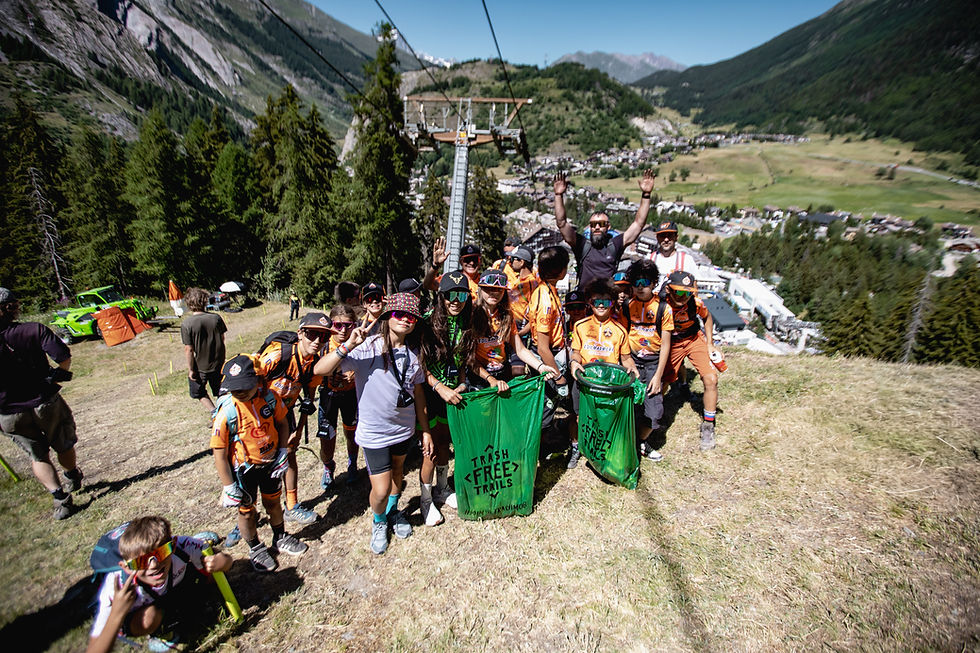
Equality of access is a major theme of the conference, as is the importance of nature preservation and sustainability. When I mentioned I was going to Sweden with Trash Free Trails I kept hearing the same refrain: Scandinavia is spotless. Sure enough, as I wonder about the trails of Sodra Berget - the south mountain - at first glance, it is remarkably clean. Picnic benches that in the UK would be swimming in small seas of single-use pollution are pristine. Whilst presenting our early results showing that trail cleaning improves wellbeing, Swedes smile at me smugly: "but we don’t have litter in Sweden." I ask them why this might be: the responsibilities of public access are taught universally in primary school, we have more bins - but the most common reason I hear is that it just isn’t part of the culture. We don’t drop it. We pick it up. We take it home.
But how spotless is Sweden actually?
However, when I hit the trails to lead my first trail clean and TFT’s first survey on Swedish soil, I uncovered a different story. We found a whopping 426 items in just 1.8 km. Whilst we found very few of the big ticket items that are a mainstay of UK trails: cans, sweet wrappers, crisp packets and plastic bottles - possibly partly because Sweden has a deposit return scheme (coming soon to the UK!) that means this pollution can be picked up for a profit.
Instead, we found little items: cigarette butts and tobacco pouches in the HUNDREDS (243 to be precise, 90% within the first 100m of the clean). While Swedes may care about the aesthetic of their environment enough to not chuck a coke bottle on the floor, there is still the same root problem of disconnection (in fact, Sweden doesn’t rank much higher than the UK in terms of nature connectedness or biodiversity intactness).
We share the same lack of awareness that a single cigarette butt dissolved in 1L of water contains enough toxins to kill 50% of aquatic life and to cause nicotine poisoning to many. We can leave the conference knowing we have made a positive trace on this beautiful little stretch of forest and that fewer animals may die or be poisoned as a result. Result!

Is culture possible to shift?
All of these cross-cultural conversations got me wondering - what even is culture? How does something become embedded within it? Why is it so hard to shift something so intangible? It’s a little like the smoke fuming from all those cigarette butts: incredibly toxic yet incredibly hard to grasp, capture and change.
Cue Fiona Spotswood, who delivers an excellent closing speech around cultural practice theory. When we think of pollution, we often think of those (insert demeaning or insulting word here) individuals who drop it. Cultural practice theory takes the shame and blame from the individual and locates it within the views, practices and routines of the culture they have inherited. To change an individual's behaviour, you often need to look towards the environment you find them in.
How do you do that? I’ve still got another 2 years to find out through our Roots to (Re)Connection project. In the meantime, I have some new avenues to explore and a pocketful of business cards of people tilling the same TOIL all over the continent. And if that doesn’t feel like hope then I don’t know what does.
Now, time for a little Friluftsliv?


Comments